Tonal Dramaturgy in Unequal Temperament: Brahms Op. 118 at A=432 Hz
Comprehensive performance practice dissertation demonstrating that bench tunings in 1893 Vienna departed from strict equal temperament. Analyzes the cyclic macro-tonal dramaturgy of Op. 118 in Lehman well-temperament: from the passionate tension of A minor, through the pastoral F major acoustic sanctuary ($392.2\text{ cents}$, $2.92\text{ bps}$), to the apocalyptic E-flat minor *Dies Irae*.
Verdi, Boito, and the 1885 Vienna Pitch Conference: Low-Pitch Reform
Archival investigation into Giuseppe Verdi's 1884 proposal for $A=432\text{ Hz}$ ($C=256\text{ Hz}$) and Arrigo Boito's advocacy at the 1885 *Internationale Stimmton-Conferenz* in Vienna. Rescues the low-pitch movement from modern esoteric mythology and examines physical downbearing stress reduction (3.6%) and string inharmonicity mechanics.
Painted Keys: Mapping the 360° Spectral Circle to Acoustic Agitation Zones
Unifies ColorMusik's 360° Spectral Circle of Fifths ($\text{Hue} = \text{Fifth Step} \times 30^\circ$) with the Five Acoustic Agitation Zones based on Plomp-Levelt auditory roughness. Formulates the 24-State Emotional Valence-Arousal circumplex model connecting historical key affects (Schubart, Steblin) with physical keyboard acoustics.
Setting Circulating Temperaments on the Modern Grand: Op. 118 Protocol
Practical workshop protocol for concert piano technicians. Provides a rigorous 13-step aural tuning sequence within the F3–F4 temperament octave, a calibrated beat-rate ladder for all contiguous major thirds, and an Electronic Tuner Device (ETD) programming card with exact cents offsets.
Acoustic Agitation as Harmonic Syntax: Computational Modeling
Computational study modeling major-third dissonance and auditory roughness across 19th-century keyboard cycles. Evaluates time-series agitation profiles for Frédéric Chopin's *24 Preludes, Op. 28* and Brahms's *Op. 118*, validating how circulating temperaments enrich macro-tonal syntax.
While textbooks often treat ternary form ($ABA$) as a static container, Brahms uses it across Op. 118 as an organic vehicle for developing variation (Walter Frisch) and dynamic acoustic modulation. In Bradley Lehman's well-temperament, the $A \rightarrow B \rightarrow A'$ shifts generate physical transitions across sensory roughness zones:
| Piece & Key | Formal Schema | The $B$-Section Contrast & Mechanism | Acoustic Shift (Lehman) | $A'$ Reprise |
|---|---|---|---|---|
|
No. 1 A minor • Appassionato |
Truncated / Compressed $ABA'$ | mm. 11–28: Modulates outward into remote tonal terrain without settling. Avoids cadential root closure until measure 10. | Plunges from A minor into the pure solace of C major C–E: 392c (3.3 bps) | mm. 29–41: Condensed single sweeping return. |
|
No. 2 A major • Teneramente |
Archetypal Lyrical $ABA'$ | mm. 49–76 (Più lento): Strict invertible canon at the octave in F-sharp minor, inverting the opening theme contour. | Moves from shimmering wide A major A–C#: 404c (11 bps) into dense, introspective canonic counterpoint. | mm. 77–116: Canon melts seamlessly back into $A$. |
|
No. 3 G minor • Allegro energico |
Martial vs. Pastoral $ABA'$ | mm. 41–72 (Trio): Radical chromatic mediant shift to B major (dolce, poco sostenuto) over a lulling pedal. | B major possesses the widest, most vibrating third B–D#: 404c (13.6 bps), creating an electric, suspended pastoral island. | mm. 73–117: Violent re-entry of the martial march. |
|
No. 4 F minor • Un poco agitato |
Continuous Canonic $ABA'$ | mm. 52–98: Expands into A-flat major with unbroken triplet arpeggiations and rhythmic echoes between registers. | Dense F minor friction transitions into the resonant overtone expanse of A-flat Ab–C: 402c (9.3 bps). | mm. 99–131: Relentless canon at octave and inverted. |
|
No. 5 F major • Romanze |
Pastoral Variations $ABA'$ | mm. 17–47 (Allegretto grazioso): Submediant shift to D major. A rustic woodwind ostinato over a D–A–D fifths drone. | Transitions from the purest acoustic sanctuary F–A: 392c (2.9 bps) into bubbling, sparkling D major D–F#: 398c (7.8 bps). | mm. 48–57: Radically shortened 10-bar reprise. |
|
No. 6 E-flat minor • Largo e mesto |
Tragic Night-Piece $ABA'$ | mm. 41–62: Heroic, martial triumphal march in G-flat major / B major that desperately attempts to transcend grief. | The triumphal march unleashes maximum acoustic agitation Gb–Bb: 402c (12.7 bps), before shattering into chaotic arpeggios. | mm. 63–86: Apocalyptic tempest swallows the *Dies Irae*. |
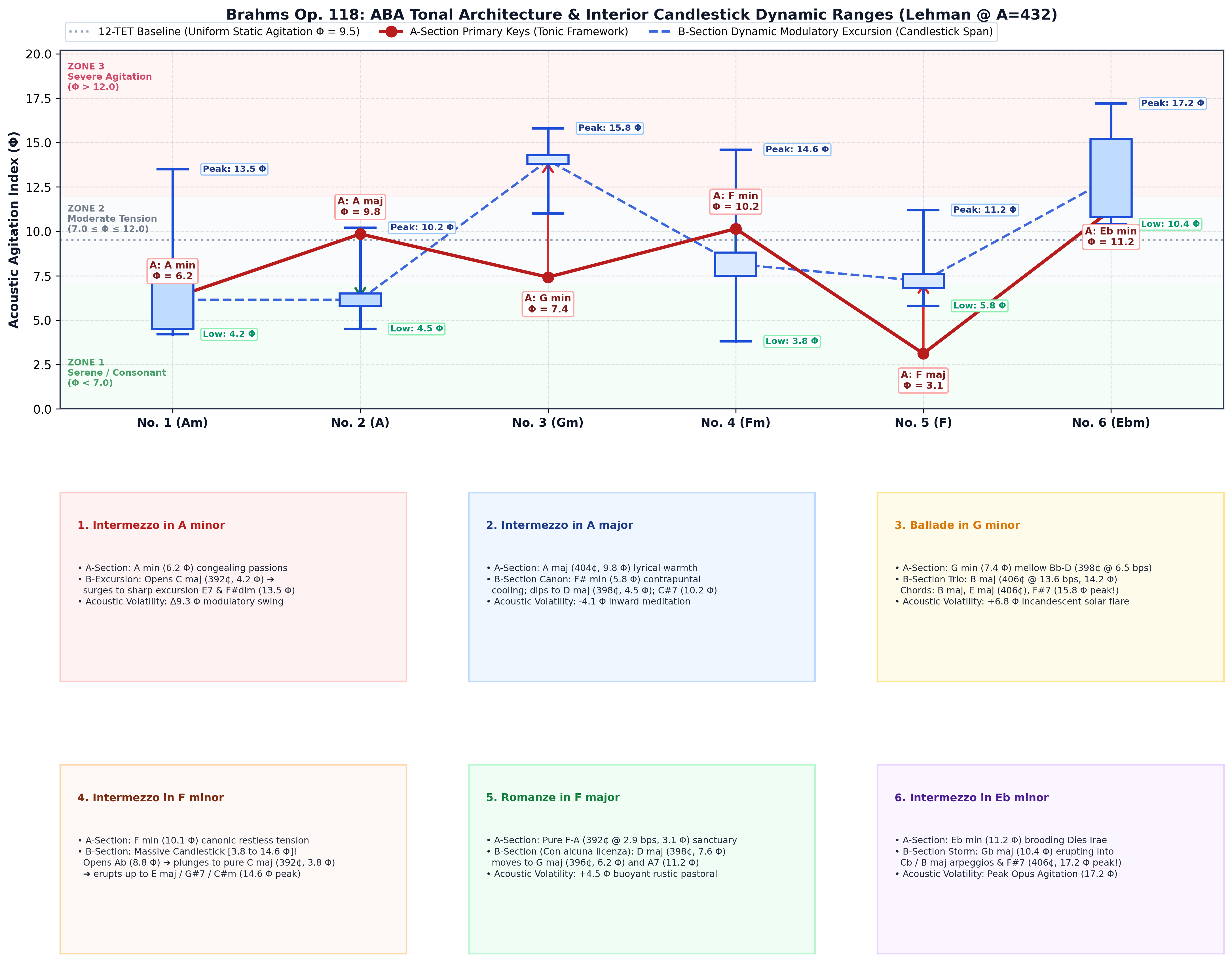
Figure 1.3b: ABA Interior Tonal Agitation
Dual-trajectory map tracking both A-section home keys and B-section contrast keys, highlighting the dramatic +6.8 Φ Trio spike in No. 3.
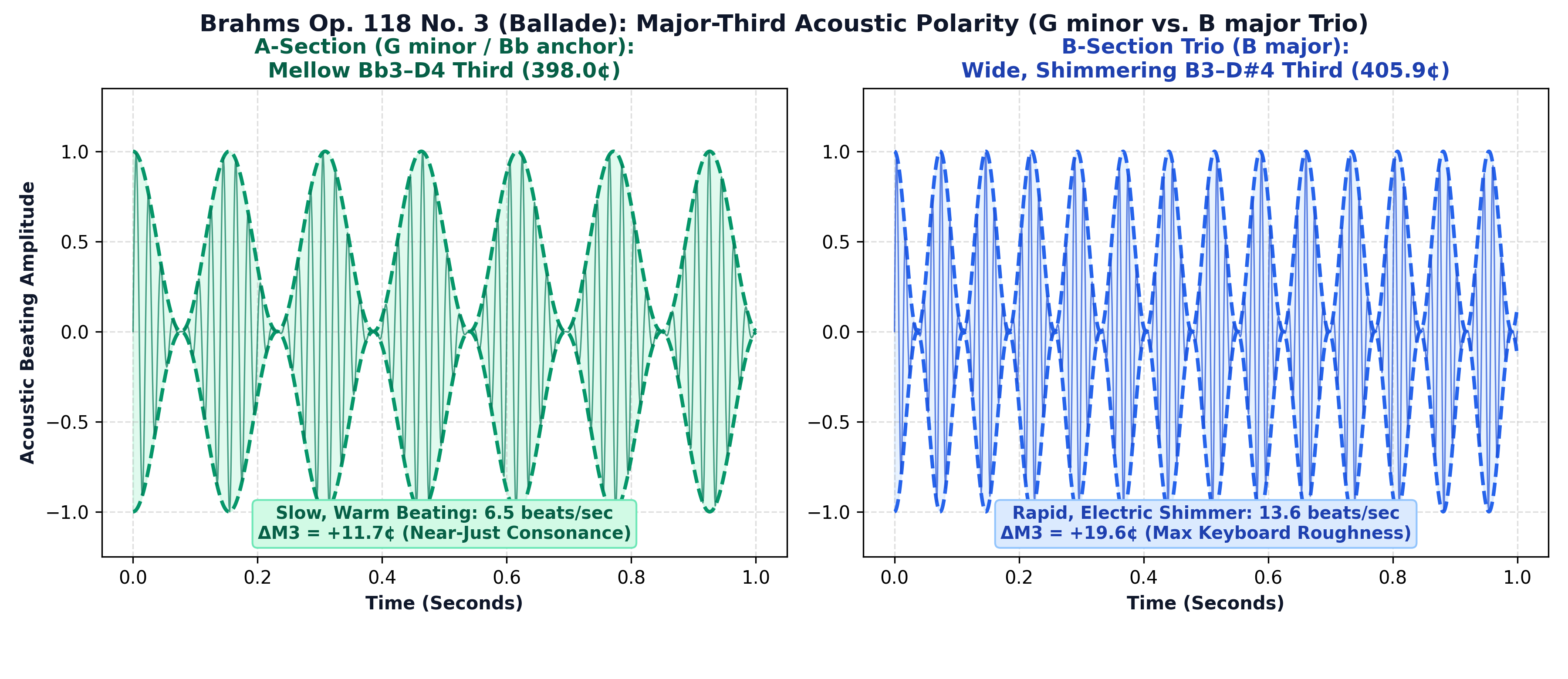
Figure 1.3c: No. 3 Major-Third Acoustic Polarity
Waveform and beating rate comparison: mellow Bb3–D4 (398¢ @ 6.5 bps) vs. shimmering B3–D#4 Trio (406¢ @ 13.6 bps).
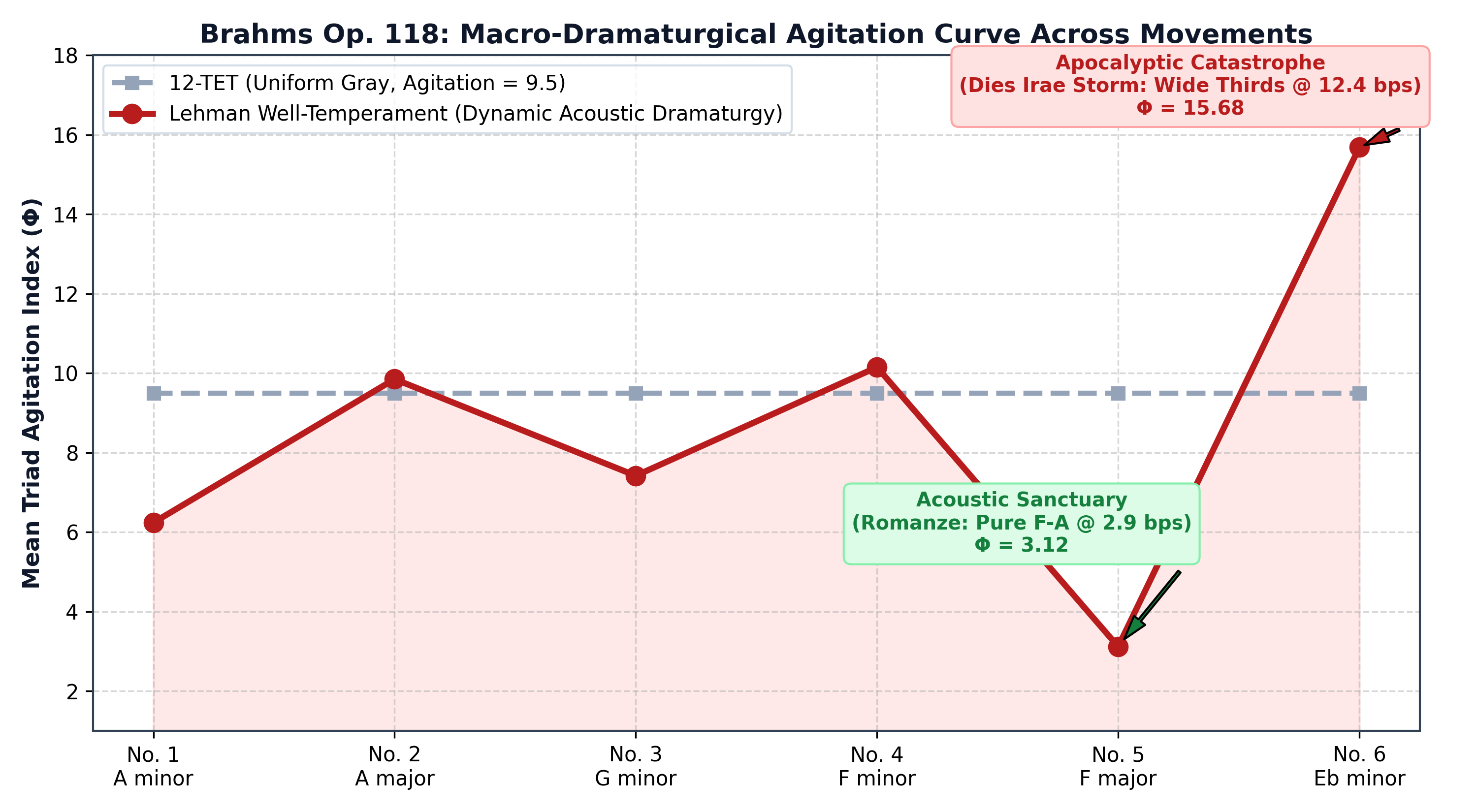
Figure 1.3: Macro-Agitation Curve
Triad agitation curve comparing Equal Temperament (flat) with Lehman well-temperament across all six pieces.
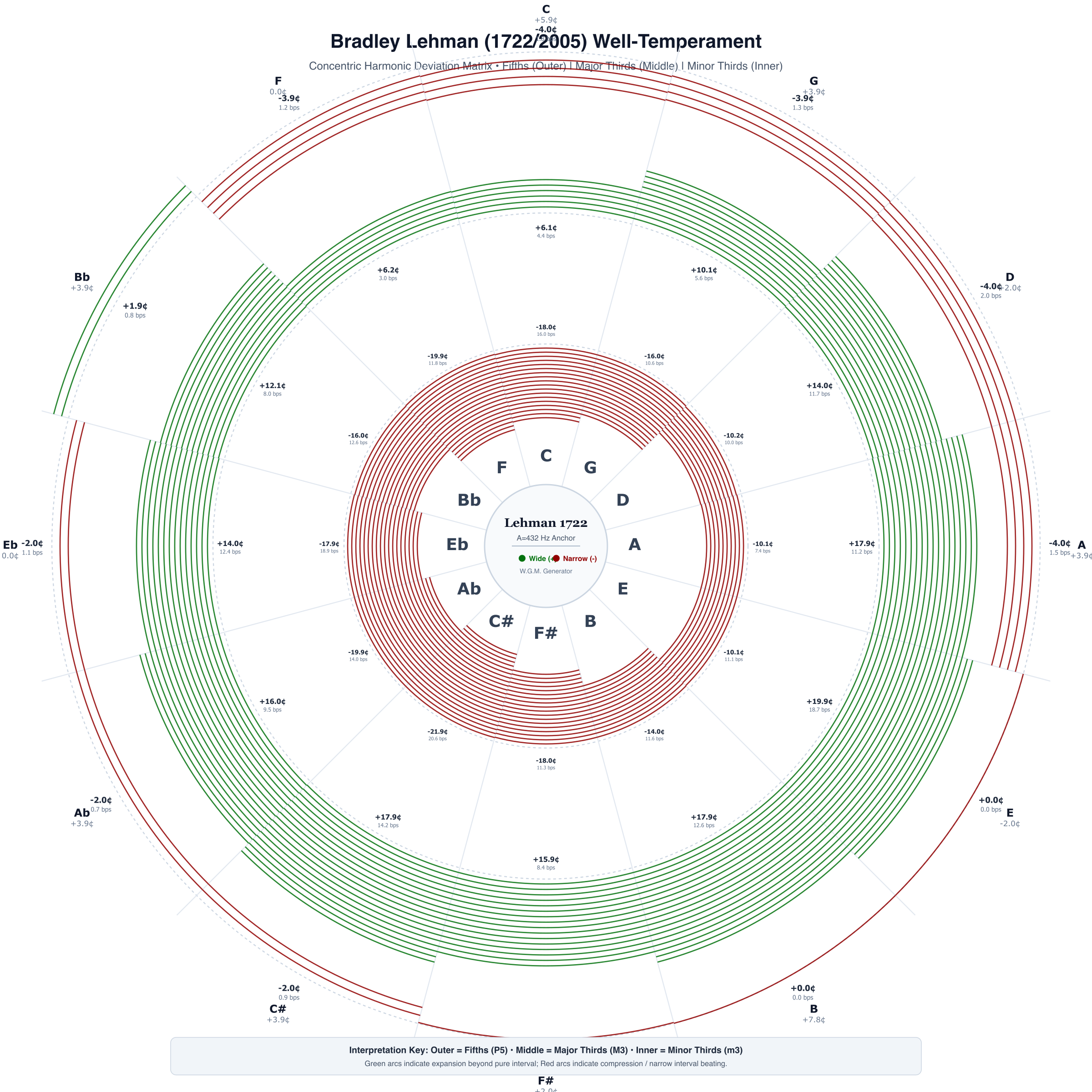
Figure 1.1: Lehman 1722 Comma Ring
Distribution of comma narrowing: five 1/6th-comma fifths, three pure fifths, and three 1/12th-comma fifths.
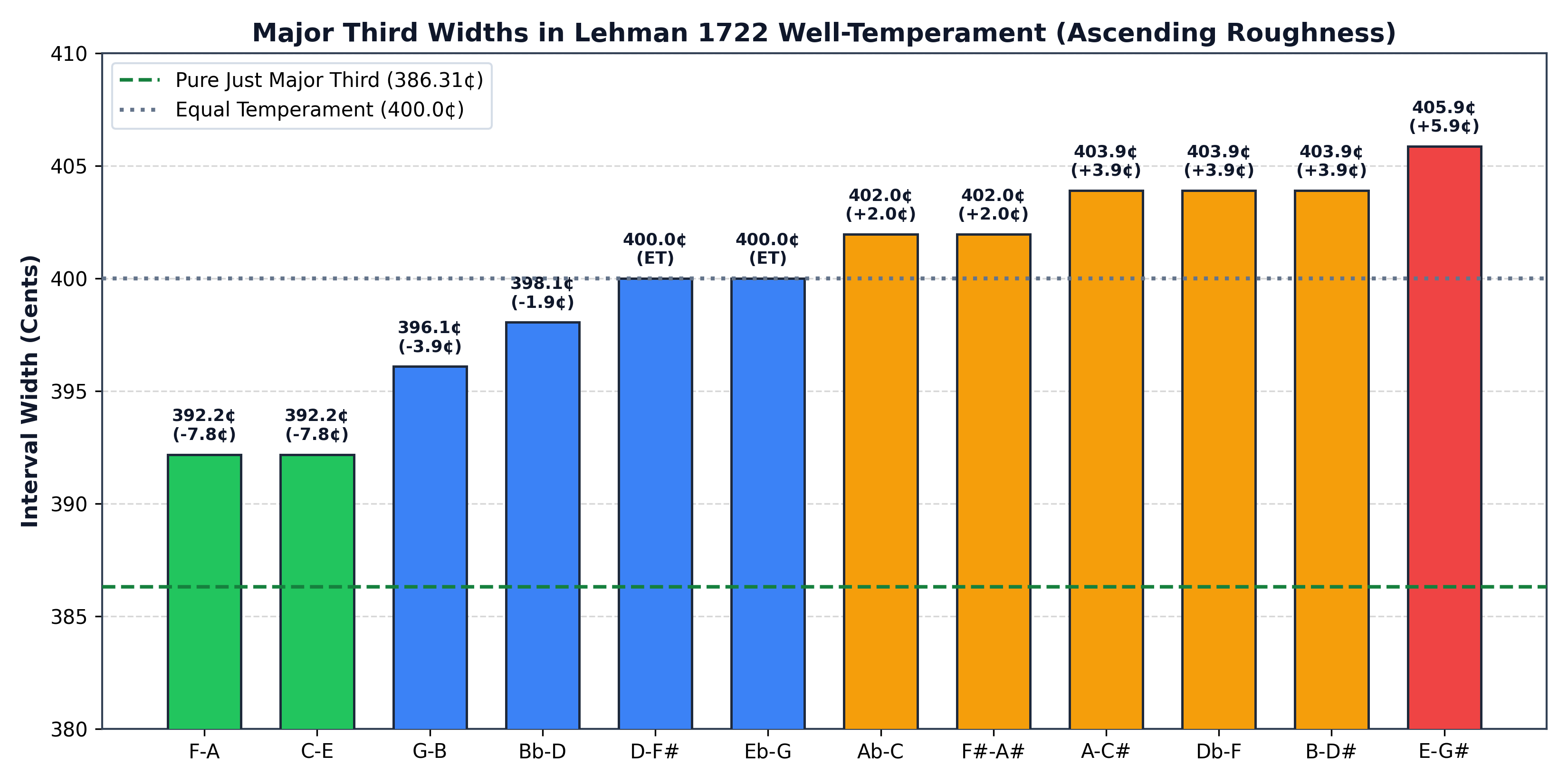
Figure 1.2: 12 Major Thirds Matrix
Width (in cents) and beating frequencies across the chromatic octave, from pure F-A (392c) to wide B-D# (404c).
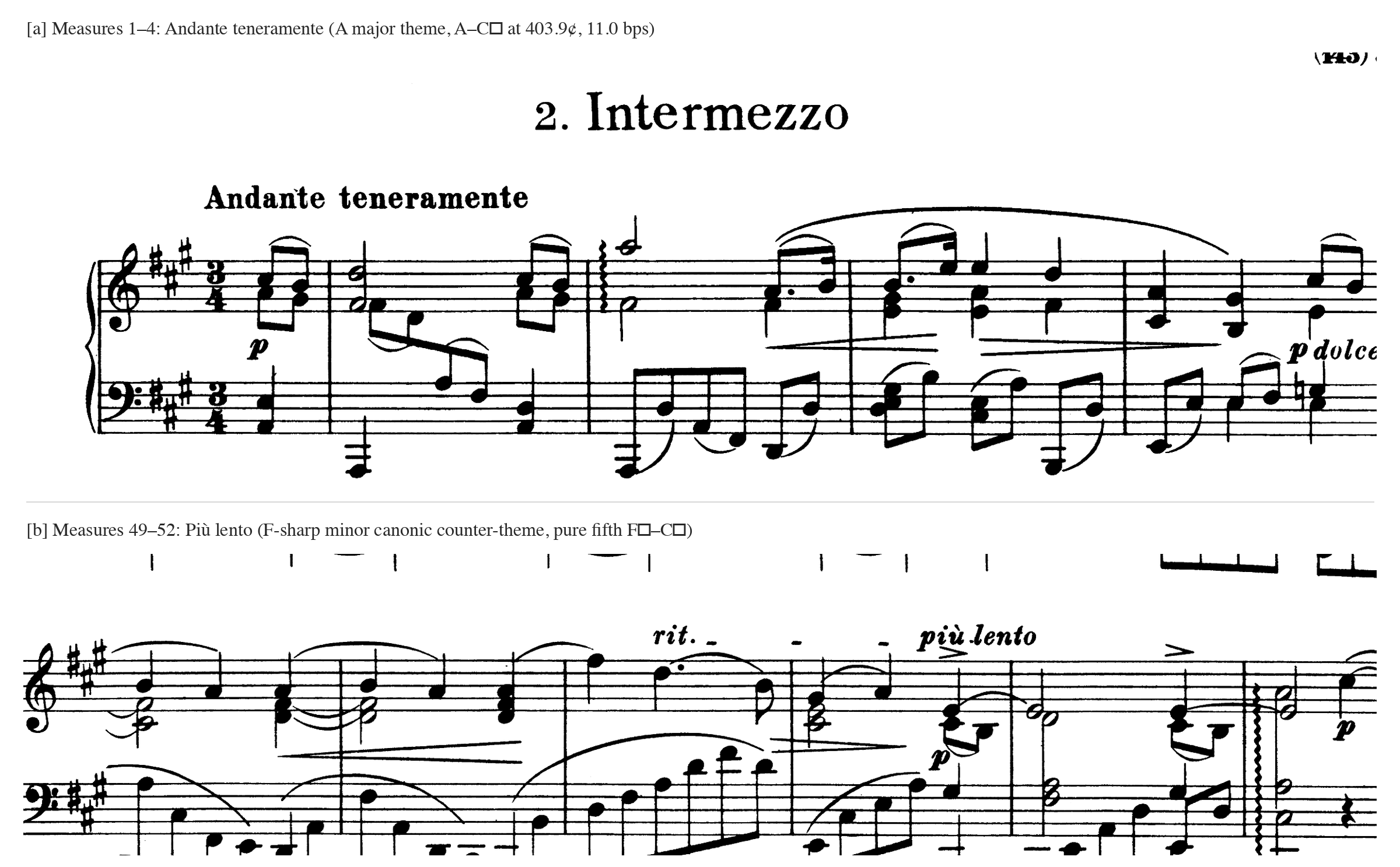
Plate 1.2: Intermezzo in A Major
Breitkopf & Härtel urtext comparison: [a] mm. 1–4 (A major theme) vs. [b] mm. 49–52 (Più lento F# minor canon).
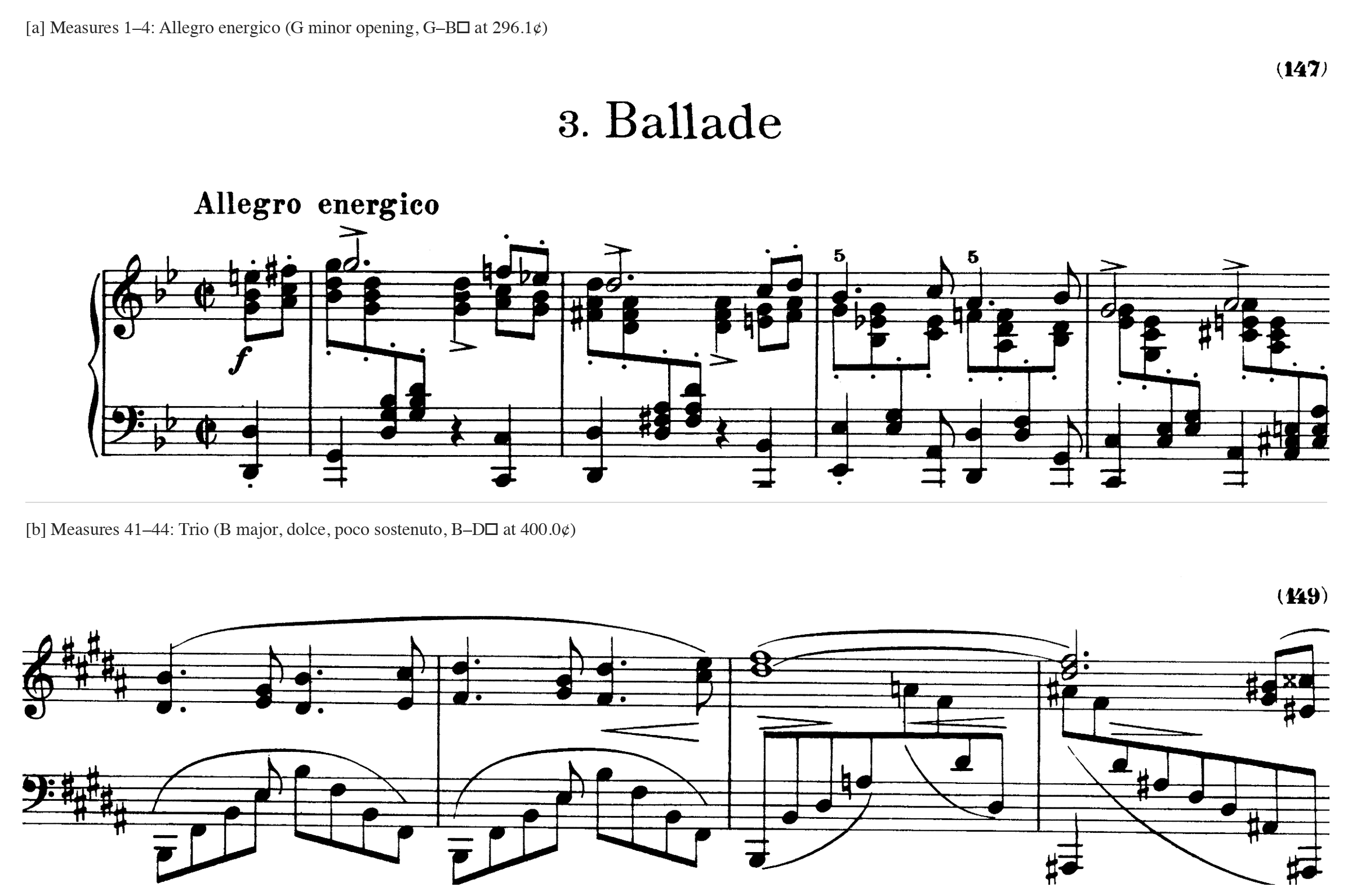
Plate 1.3: Ballade in G Minor
Breitkopf urtext comparison: [a] mm. 1–4 (Allegro energico) vs. [b] mm. 41–44 (Trio in B major).
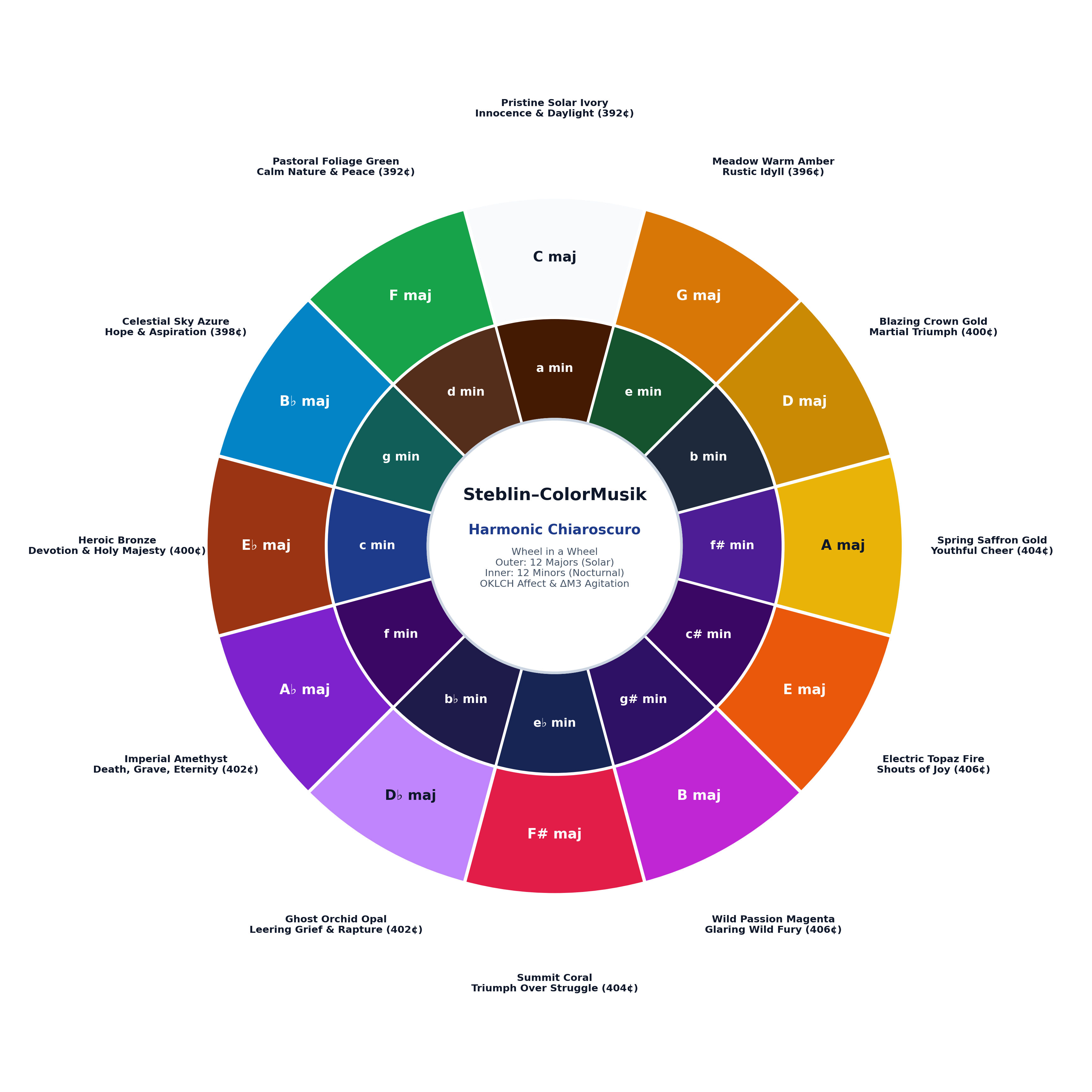
Figure 3.1: 360° Spectral Palette
ColorMusik Circle of Fifths mapped to acoustic agitation zones and sensory tension.